3 Reasons Why Cold Testing is Critical for Automotive Safety & Performance
Published on2026-03-17/News

Every winter, automakers send prototype vehicles to frozen proving grounds to see how they handle the most brutal conditions on Earth. These extreme cold tests aren’t just ritual or marketing – they are essential engineering steps to ensure that cars remain safe and reliable when temperatures plunge.
In fact, industry experts emphasize that cold-weather testing is crucial for evaluating vehicle performance under low-temperature extremes. By exposing vehicles to harsh cold, snow, and ice, engineers can uncover hidden flaws that would never appear in mild climates. The result is a safer, more durable car for consumers. Here are the three most important reasons why cold testing is critical for automotive safety and performance.
Sub-zero temperatures and icy environments reveal weaknesses in vehicles that normal conditions simply can’t. Many failure modes only emerge when the mercury drops far below freezing. For example, materials behave differently:
There are so many failure modes that get introduced by cold temperatures, and much of it isn’t intuitive. For instance, intercoolers and emissions systems can be brought to their knees by frozen condensation – moisture that normally evaporates may freeze solid inside pipes or valves.
Such ice blockages would never happen in a California summer, but a Scandinavian winter can cripple an engine’s breathing or emission controls if those systems haven’t been designed with deep cold in mind. Extreme cold and ice effectively stress-test every part of a vehicle, from the smallest sensor to the structural frame, revealing design weaknesses that mild-weather testing could overlook. Exposure to these harsh conditions in a controlled setting helps manufacturers find and fix issues before they become real-world problems.
Cold testing has repeatedly exposed real-world problems that would not surface otherwise for all types of cars.
A prime example is the battery performance of electric vehicles (EVs) in freezing weather.
In routine conditions an EV battery operates efficiently, but at sub-zero temperatures the electrochemical reactions slow dramatically. The result? Significantly reduced driving range and sluggish recharging. Studies have found that in subzero cold, EVs can lose anywhere from 10% up to 36% of their driving range. Drivers in one recent cold wave even reported their EVs would not charge at all until the battery pack self-warmed – the cars displayed messages that the battery was too cold to accept charge.
Only by testing EVs in bitter winter conditions can engineers refine battery heating systems, insulation, and charge protocols to mitigate this drop in performance. Cold chambers and winter test runs help automakers ensure an EV will still meet customers’ needs on a frigid morning, not just in sunny weather.
Traditional vehicles are not off the hook either.
Electronics and wiring can behave unpredictably in extreme cold if not validated. LCD screens in the dashboard might respond slowly or even black out until warmed. A car’s starter battery (for gasoline or diesel models) delivers weaker current when it’s very cold, which can make engine starts difficult – a familiar issue in older cars that modern cold cranking tests aim to prevent.
Moreover, entire electrical systems can suffer in severe cold; alternators, sensors, and even motors for power windows or fuel pumps may falter if ice forms or lubrication is insufficient.
It’s only through sub-zero endurance tests that engineers catch these failures. They cycle vehicles overnight in -30°C chambers and attempt morning start-ups, and they run accessory systems in deep cold to see what breaks. Such tests ensure that when a customer in the frozen North turns the key, the car springs to life reliably – even if that means redesigning a relay or using a different grease on a window motor that was sticking in Arctic conditions.
Another real-world issue in winter is traction and control on slick surfaces. Cold testing on snow and ice often uncovers handling problems that dry-road testing can’t reveal. Tires that work well on asphalt may turn rock-hard in severe cold, drastically losing grip. Traction control systems and anti-lock brakes (ABS) that behave flawlessly on wet pavement might struggle on a sheet of ice or in powdery snow.
Engineers have found that slush and ice can confuse wheel speed sensors or clog ABS modulators, leading to longer stopping distances or unstable skids if not properly tuned. Testing on low-friction surfaces allows automakers to observe how the car’s traction aids perform when one wheel suddenly hits an icy patch. In fact, manufacturers routinely take prototypes to special proving grounds blanketed in snow to validate these systems. Tires, ABS, traction control, and stability control are all pushed to their limits in snowy and icy conditions during development.
The data from these tests often prompts adjustments – for example, refining the ABS algorithm to account for loose snow, or tuning the traction control to cut power more gently on ice to avoid a spin. These tweaks simply wouldn’t emerge from simulations alone, since the chaotic nature of real ice and snow is hard to perfectly model.
Modern engineering has powerful simulation tools and climate-controlled labs, but no computer model can fully capture the complexity of real-world cold conditions. Nature has a way of throwing curveballs – whether it’s an unpredictably slick black-ice layer on a country road or an electronics-quashing magnetic storm on a polar night – that standardized tests might miss.
This is why experienced auto engineers still swear by field testing in true winter environments. In the end, what good are the results from laboratory tests if a technology fails in practice? Proving grounds offer dynamic scenarios – snow ingress into the engine bay, ice forming in wheel wells, crosswinds on icy roads – that are nearly impossible to reproduce in a lab.
Moreover, human factors come into play. Cold testing isn’t only about the car; it’s also about how drivers and passengers experience the vehicle in winter. No simulation can tell you that a particular car’s door handle becomes too stiff to operate with gloves on at –25°C, or that the defroster takes too long to clear the windshield in a real blizzard. Only hands-on testing by engineers in those conditions will catch such issues. This on-site insight leads to small but important improvements: perhaps a different lubricant in the door latch, or a software tweak so the defroster prioritizes certain vents for faster clear-up. These details can make the difference between a car that’s merely tested in theory and one that’s truly optimized for customer satisfaction in winter.
In the end, cold testing provides a kind of confidence that no shortcut can replace. It is a trial by ice that yields trust. Vehicles that undergo extensive cold-weather development emerge as well-rounded, robust machines ready to tackle any climate
A car proven in extreme cold will start every time, keep occupants safe and comfortable, maintain its performance, and endure year after year of winter abuse. Cold testing is where theory meets reality, and when it comes to automotive safety and performance, there is no better teacher than winter’s harsh embrace.
Feel free to reach out to us to learn more about cold environment testing and how we can help put your vehicles through the ringer.


Stay in the heart of central Arjeplog within easy walking distance of grocery stores, restaurants and other services. All 8 apartments are designed in a contemporary Scandinavian style and are outfitted with their own kitchen and bathroom.
 Own Kitchen/Kitchenette
 Own Bathroom & Shower
 Free Parking
 Laundry Room
 High-speed WiFi
 TV


Opened in 2026, we offer 15 modern apartments/rooms of varying size along with generous social areas, including a well-equipped communal kitchen/dining room (some rooms have their own kitchen) and an inviting lounge.
 Shared Kitchen & Lounge Area
 Breakfast Buffet
Own Bathroom & Shower
Free Parking
Laundry Room
 Gym
High-speed WiFi
TV

Located in central Arvidsjaur as the perfect base of operations for endurance test projects on the public road network, this building has two workshop units, a cold garage, office space, social areas and EV-charging possibilities both in- and outdoors.
 Kitchen & Break Room
 Office Space
 Conference room
 EV-charging (AC)
High-speed WiFi

Multiple heated garages of varying size (up to 4 vehicles) are available, allowing for safe parking of vehicles and/or material storage.
High-speed WiFi
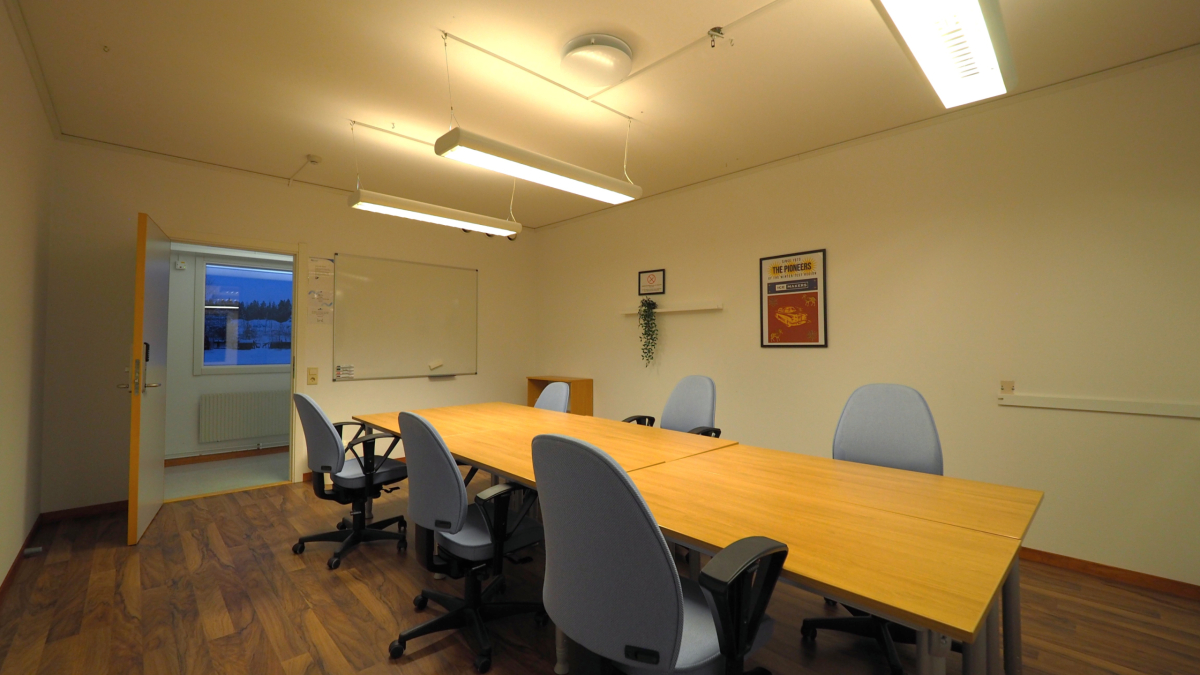

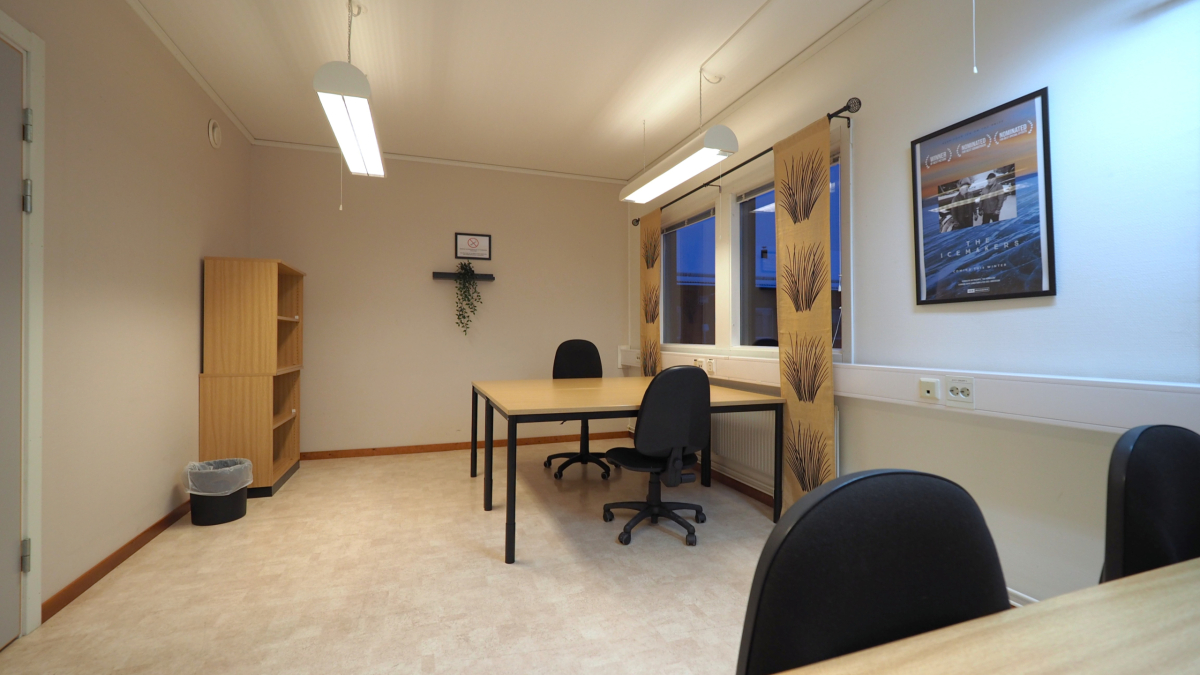

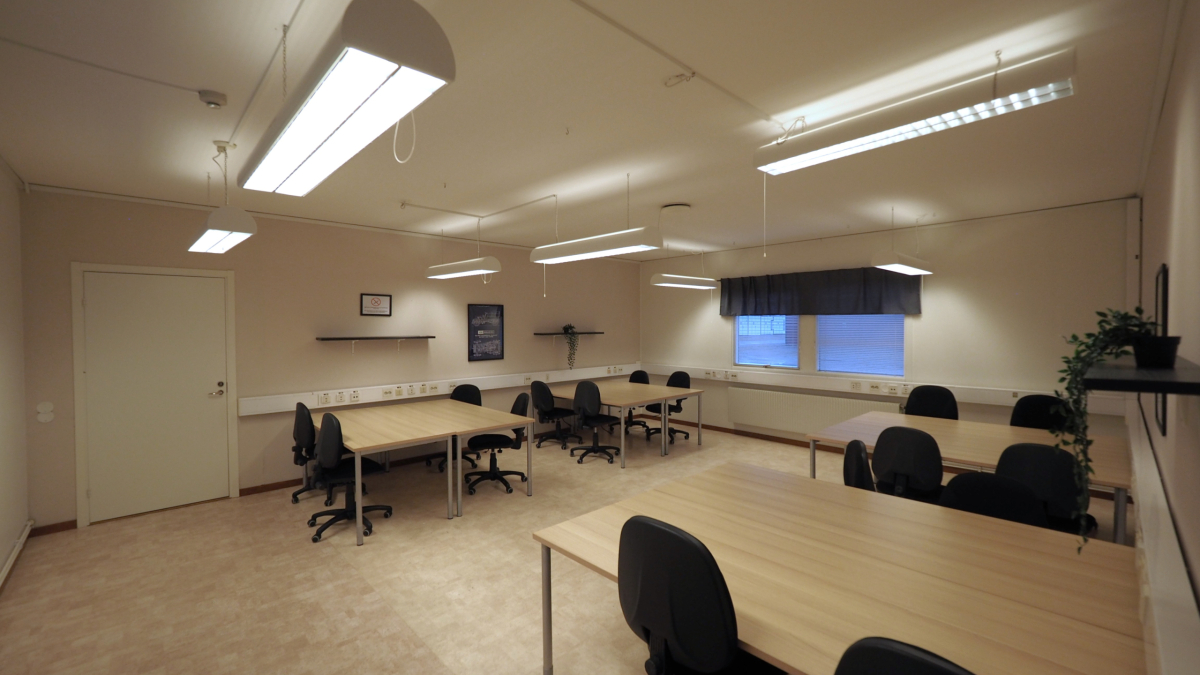

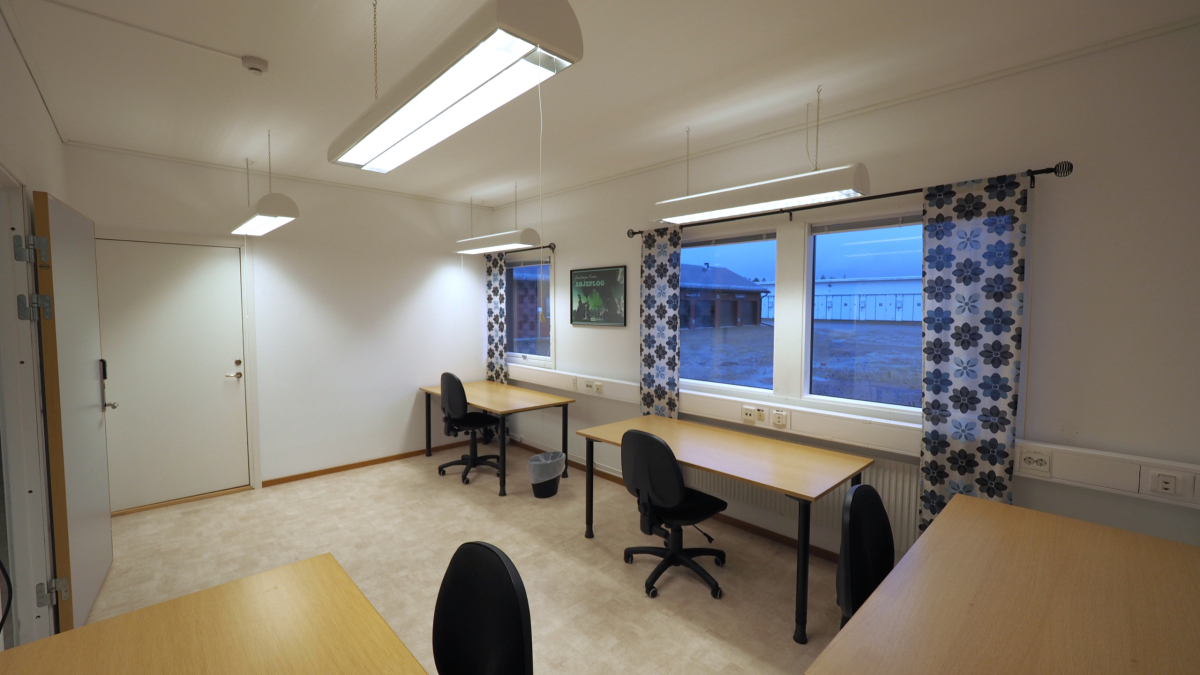
Multiple offices of varying size with space for 4-16 people each. All offices have access to high-speed Internet and a shared kitchen/social room.
Kitchen & Break Room
High-speed WiFi


Workshop unit in the Maskinvägen 13-complex, including:
EV-charging (AC)
High-speed WiFi
Workshop unit in the Maskinvägen 13-complex, including:
EV-charging (AC)
High-speed WiFi


Workshop unit with integrated offices in the Maskinvägen 13-complex, including:
EV-charging (AC)
Office Space
High-speed WiFi


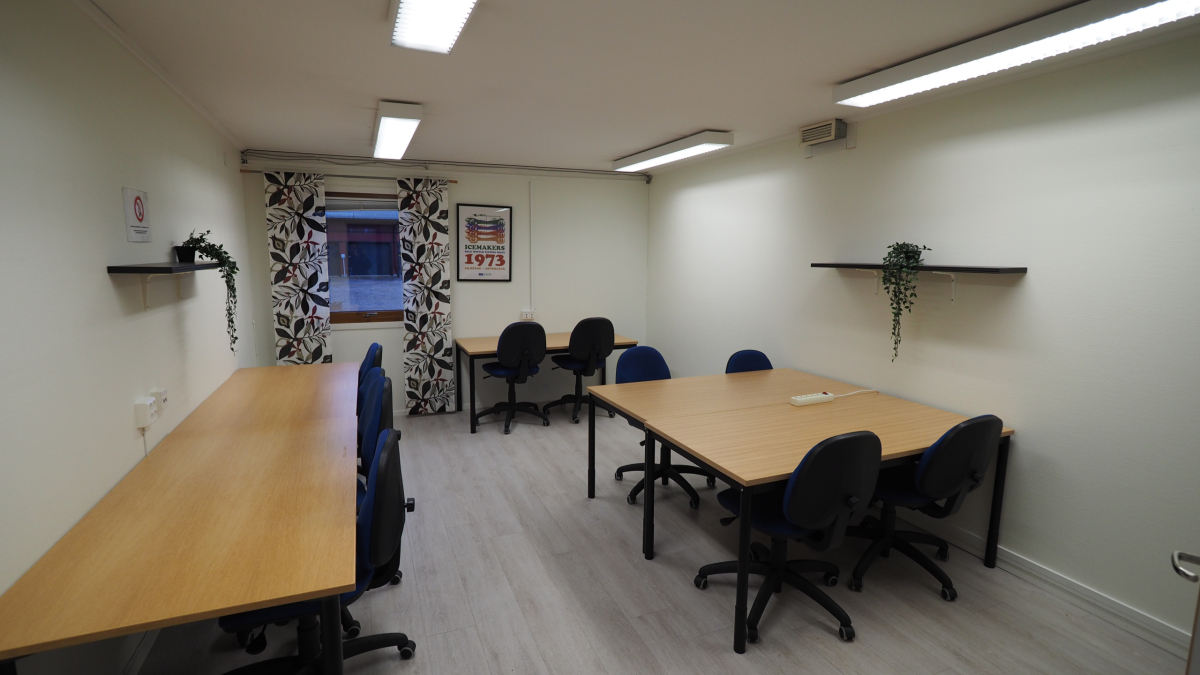

Closed-off part of the Maskinvägen 13-complex including:
Kitchen & Break Room
Office Space
Conference room
EV-charging (AC)
High-speed WiFi


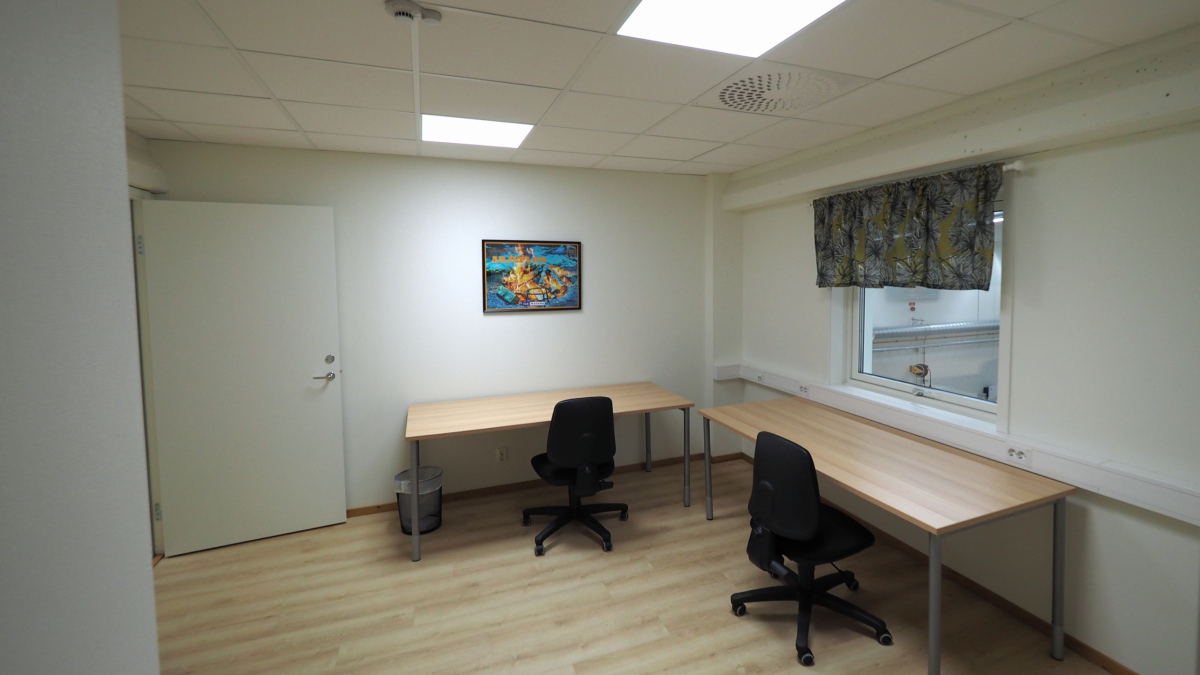
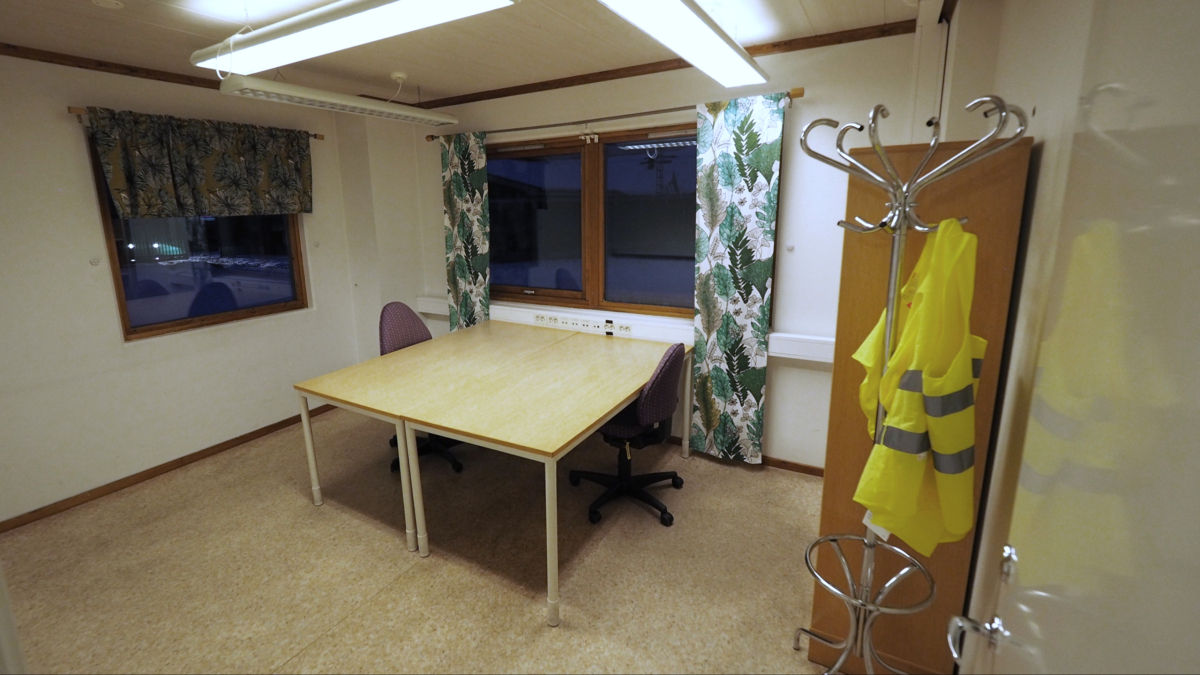

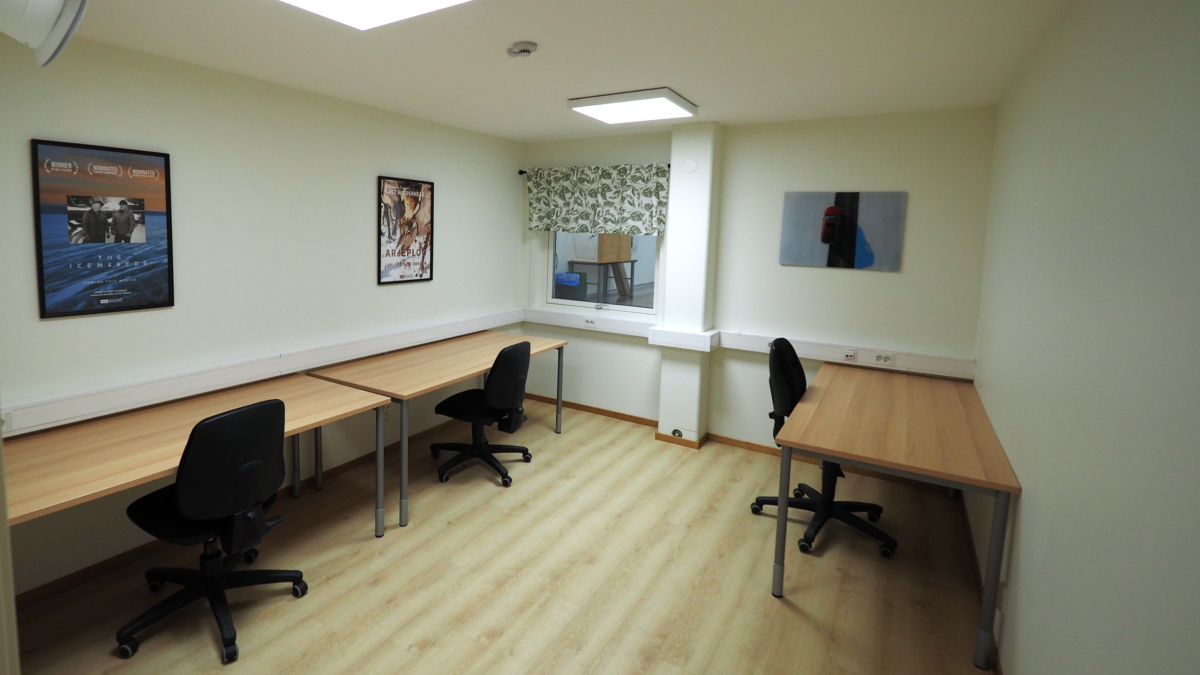
An extensive, fully integrated and fenced-off facility including workshops, offices, conference room and social areas
Kitchen & Break Room
Office Space
Conference room
EV-charging (AC)
High-speed WiFi


Workshop with four vehicle lifts and five doors. Sufficient space for parallel work or over-night storage of five vehicles. Door dimensions are: 2.4m (width) x 2.9m (height). Access to compressed air, running cold water and use of basic tools is included in the rental cost. The rental object also contains workstations for two-four people, and a WC. The garage is heated with a single door and space for one vehicle. In connection to the garage is a ~14m2 storage room. In connection to the workshop and garage, five office rooms with space for 2-7 people are available, along with a small conference room/large office for 9 people. Also included is a large kitchen, social room and WC. Secure, high-speed Internet connection is available throughout the unit via cable or Wi-Fi.
Kitchen & Break Room
Office Space
Conference room
EV-charging (AC)
High-speed WiFi


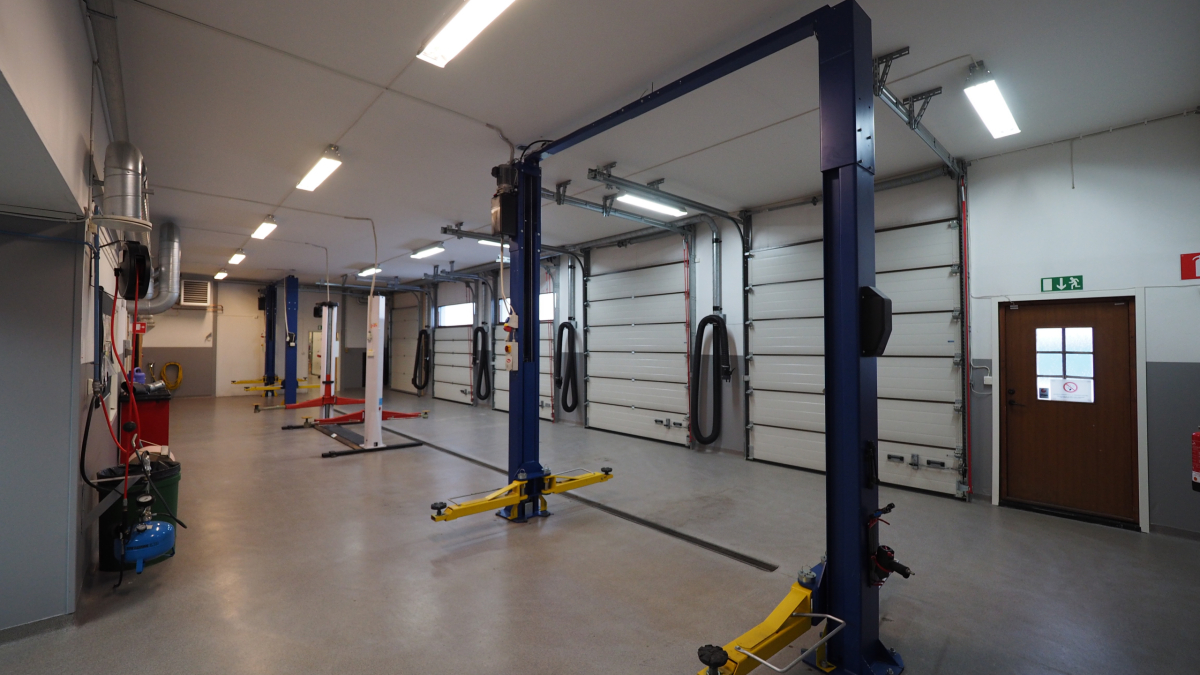

Workshop with three vehicle lifts and a total of five doors. Sufficient space for work on up to five vehicles. Three garage doors with the dimensions 2.5 x 3.0m (width x height) and two doors with the dimensions 2.5 x 2.0m (width x height). Access to compressed air, running hot and cold water, pressurized air, adequate machinery for fitting, removing and balancing tires and use of basic tools is included in the rental cost. In direct connection to the workshop there is an office for up to five people, a kitchen/social room, and a WC. Secure, high-speed WiFi-connection is available throughout the unit.
Kitchen & Break Room
Office Space
EV-charging (AC)
High-speed WiFi
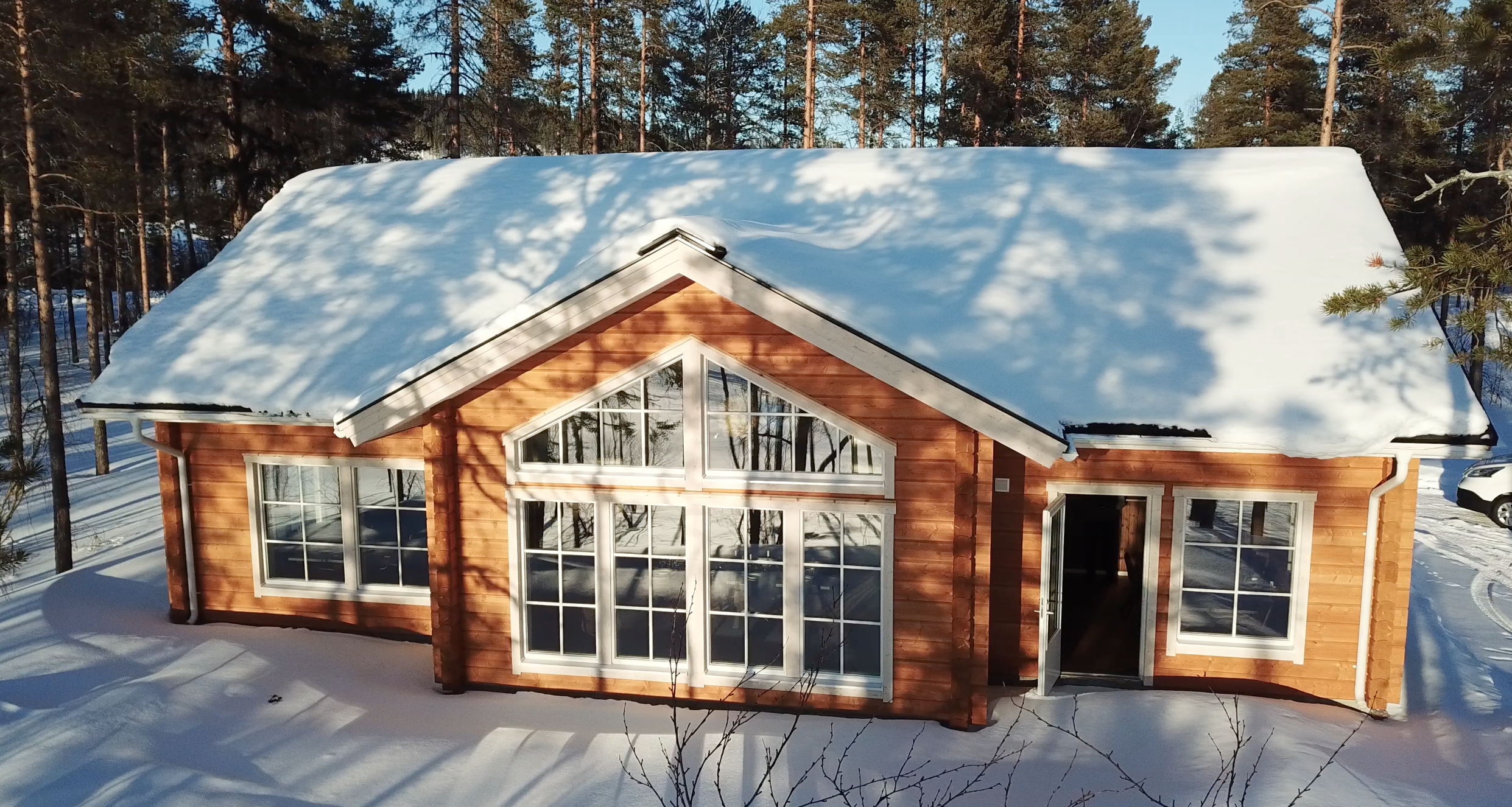

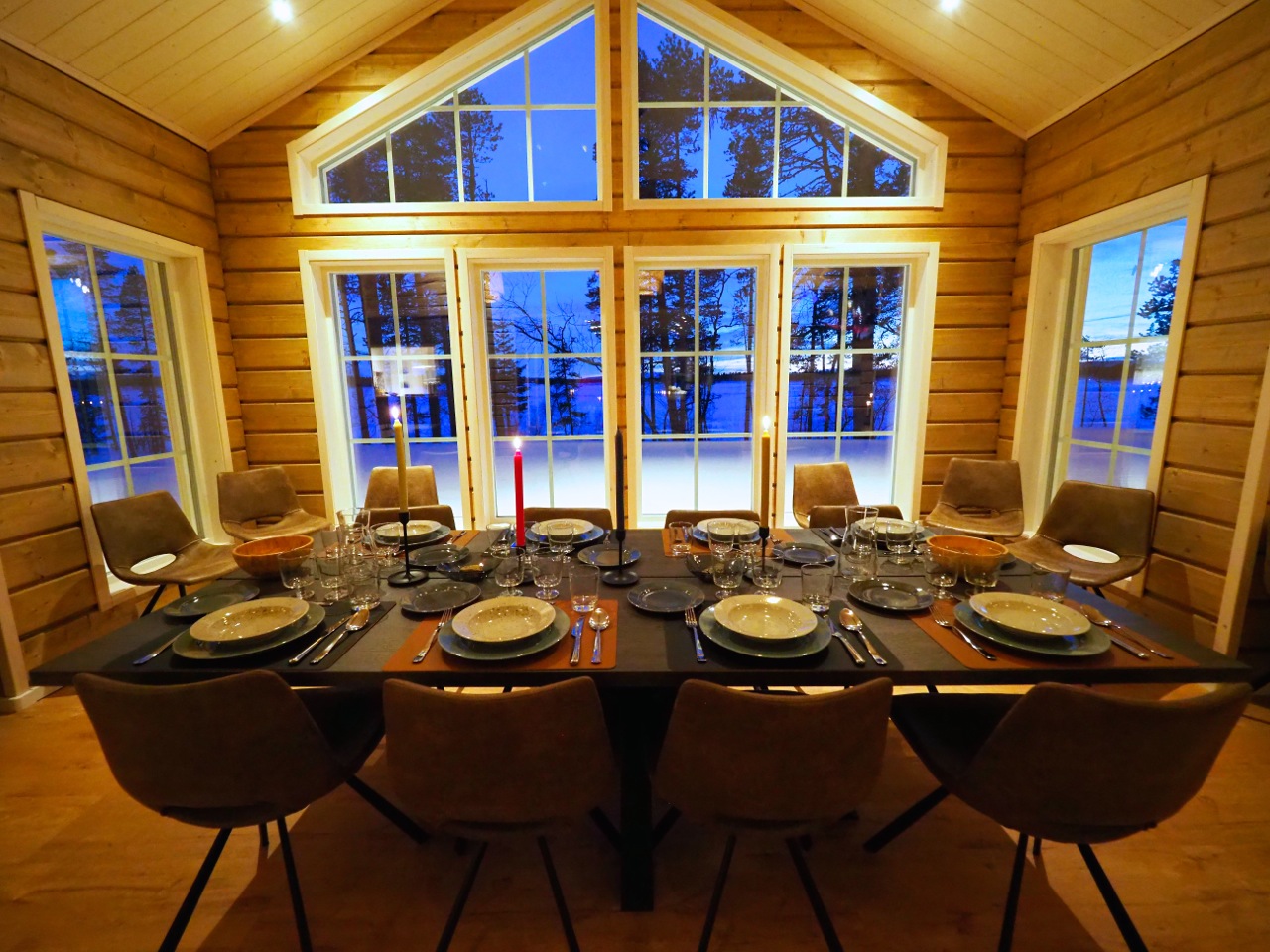
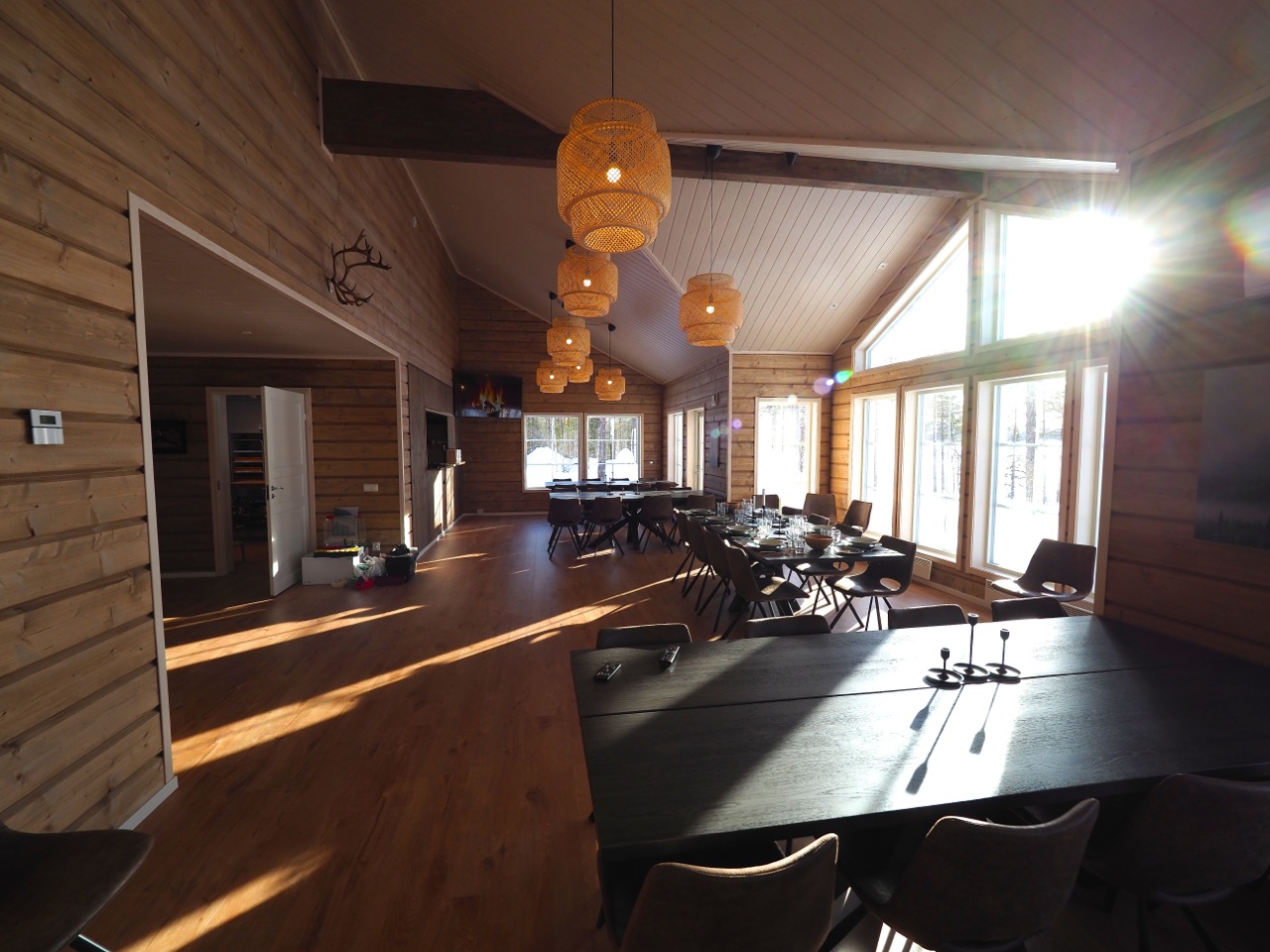
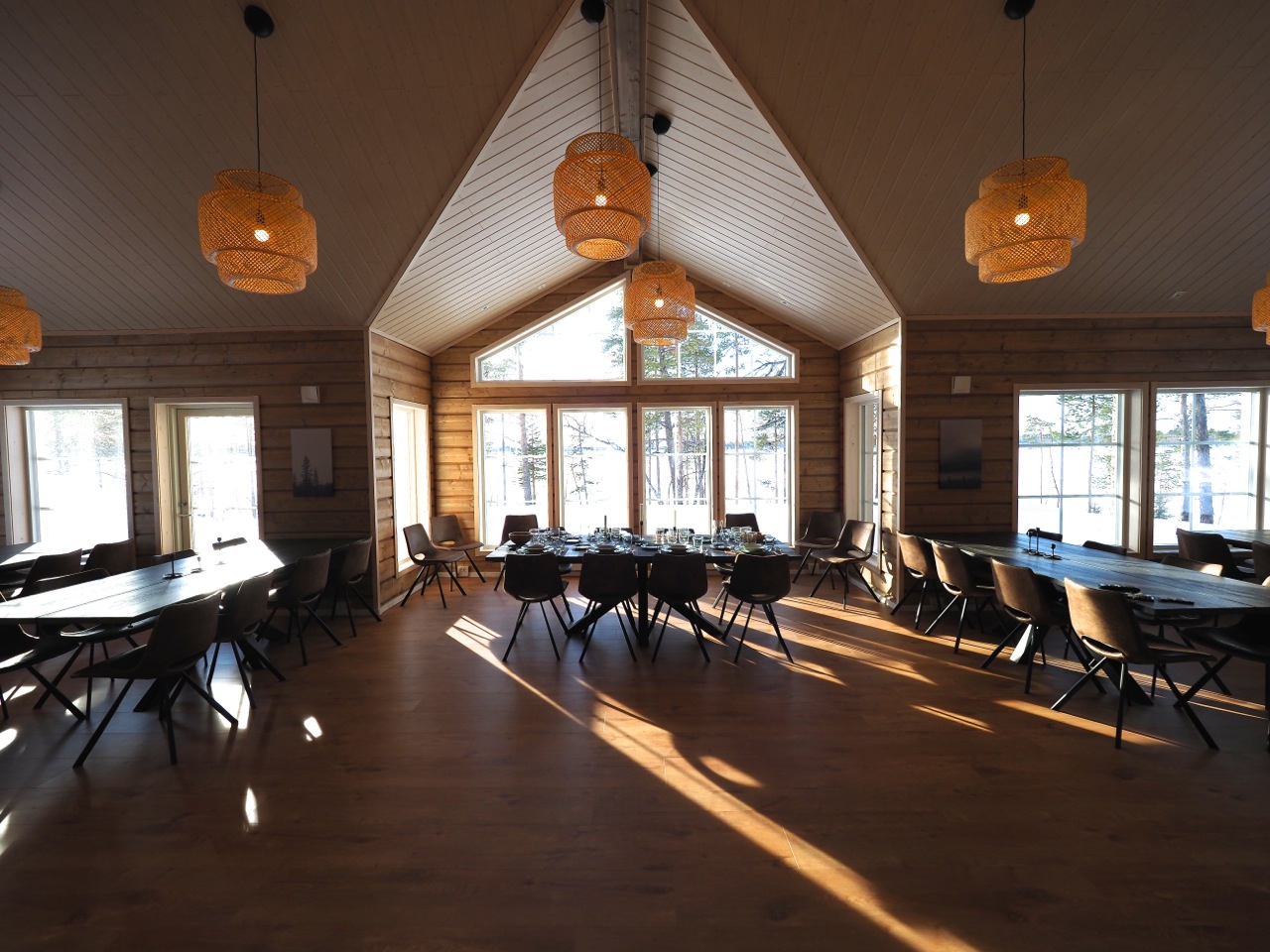
Located on the shores of Lake Kakel with an exclusive access road to the lake tracks, this is the perfect venue for hosting exclusive presentations, conferences, dinners and other events.
 WC
Kitchen
Presentation equipment
High-speed WiFi
Catering possibilities

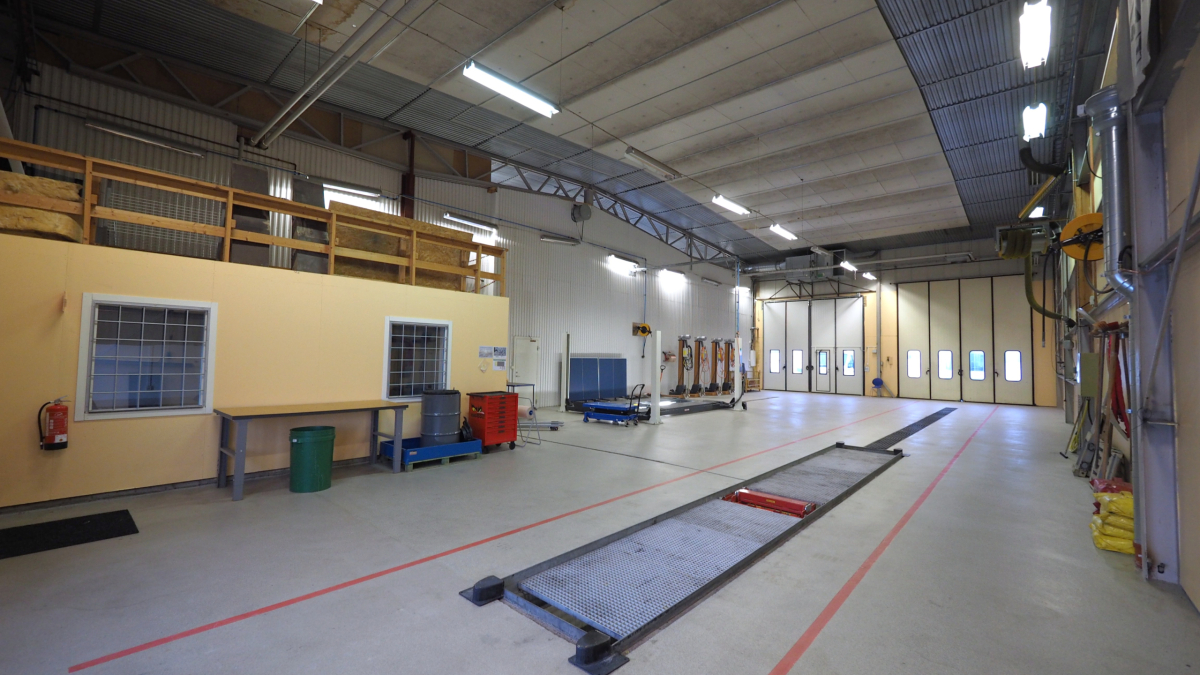


A fully integrated unit with a large workshop suitable for heavy vehicles, office space and a small kitchen
Kitchen & Break Room
Office Space
EV-charging (AC)
High-speed WiFi.


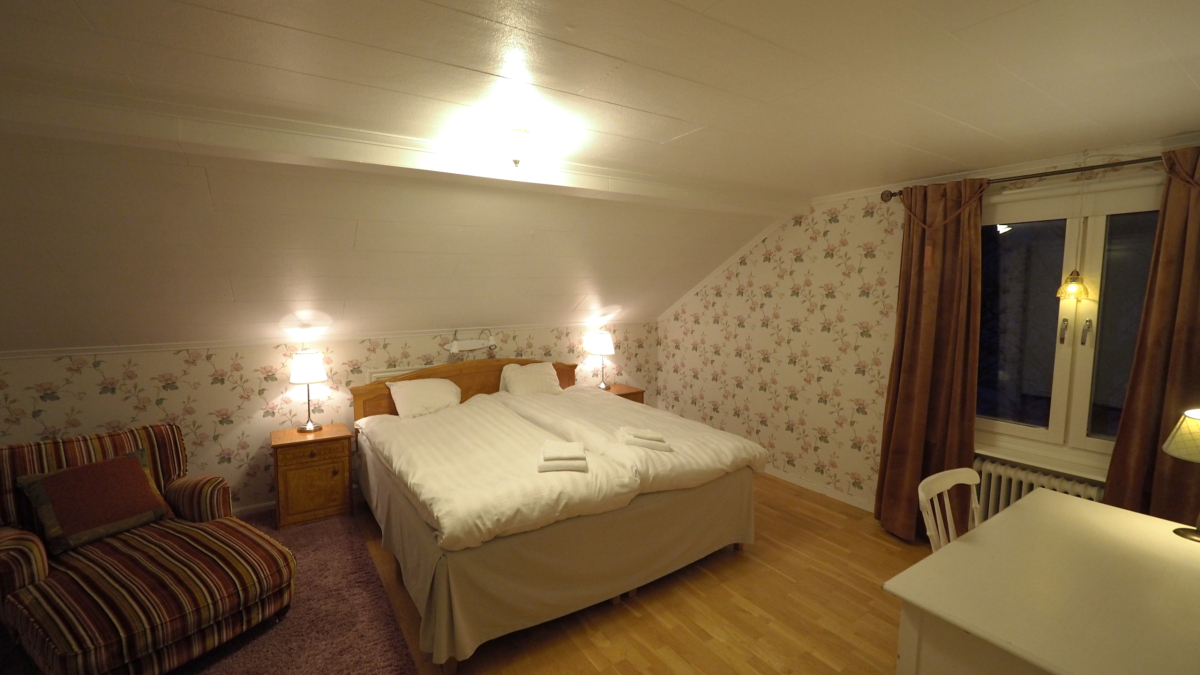
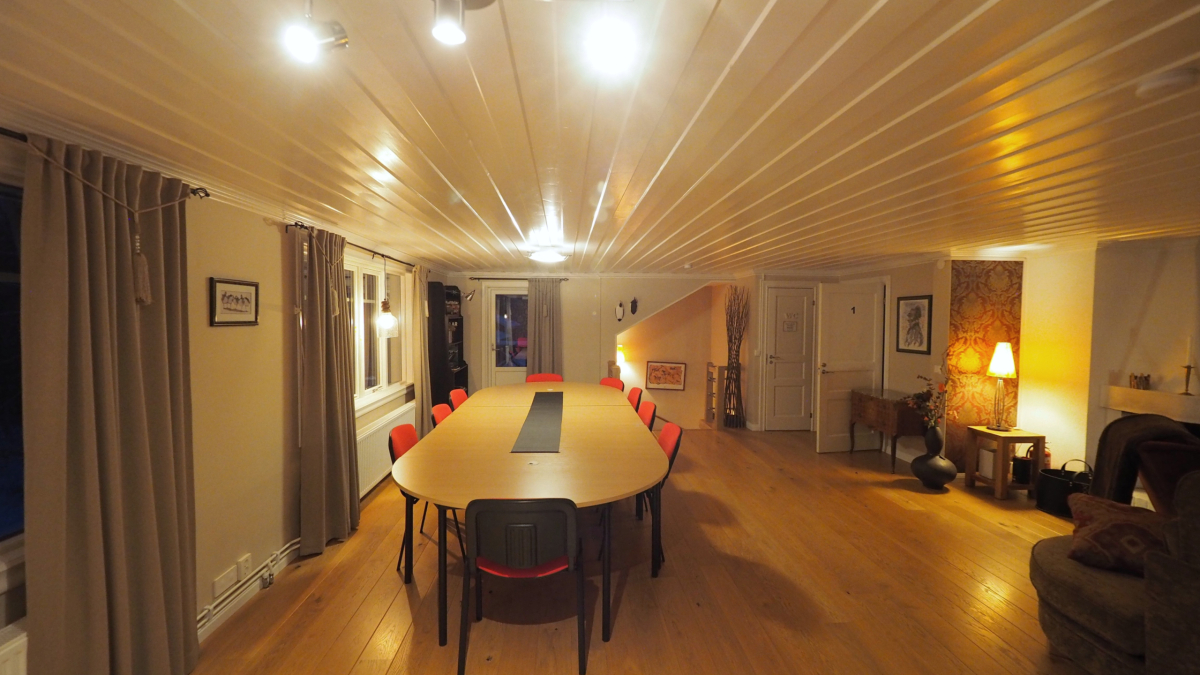
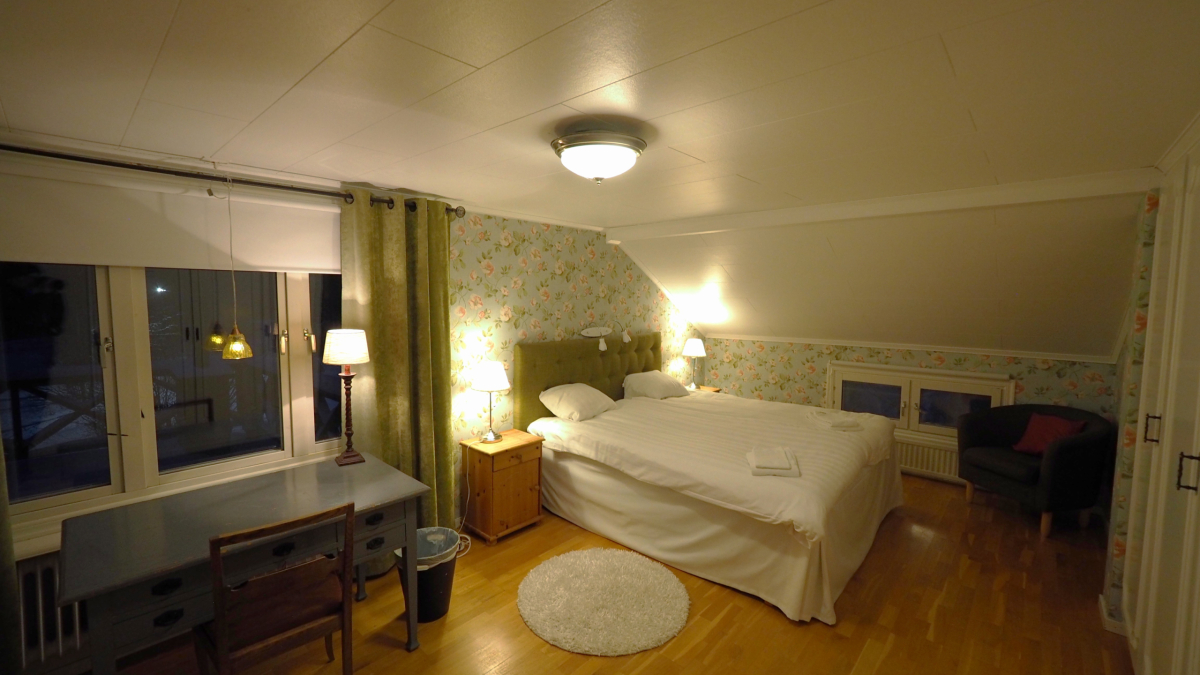
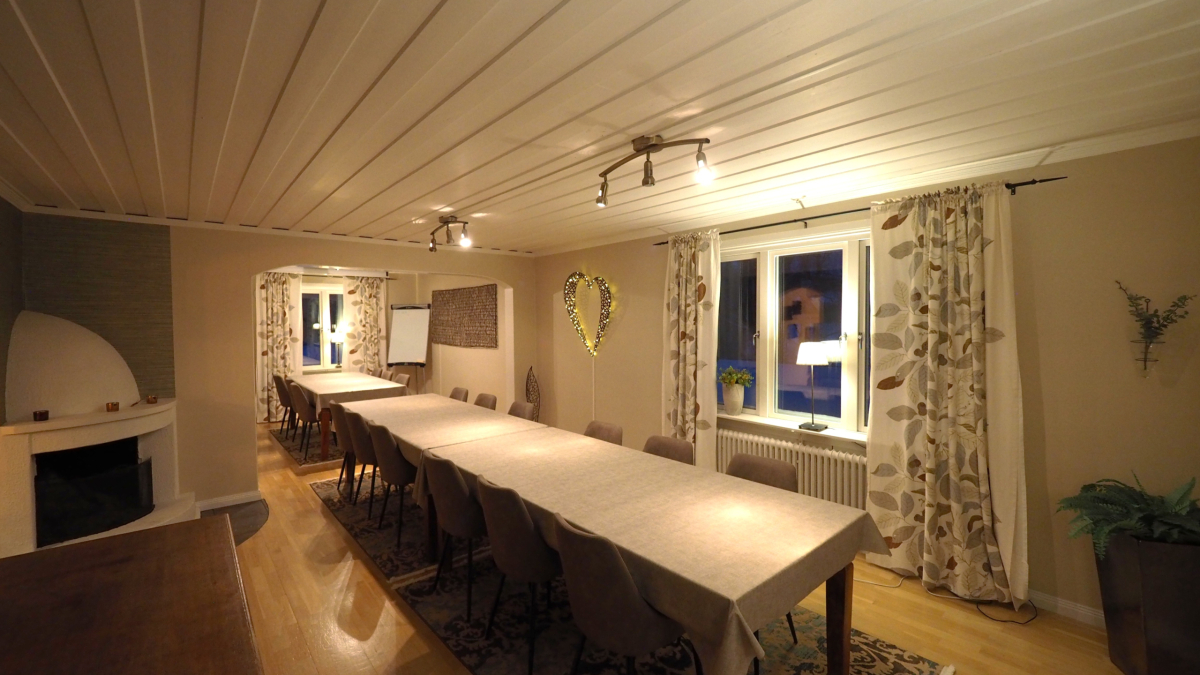

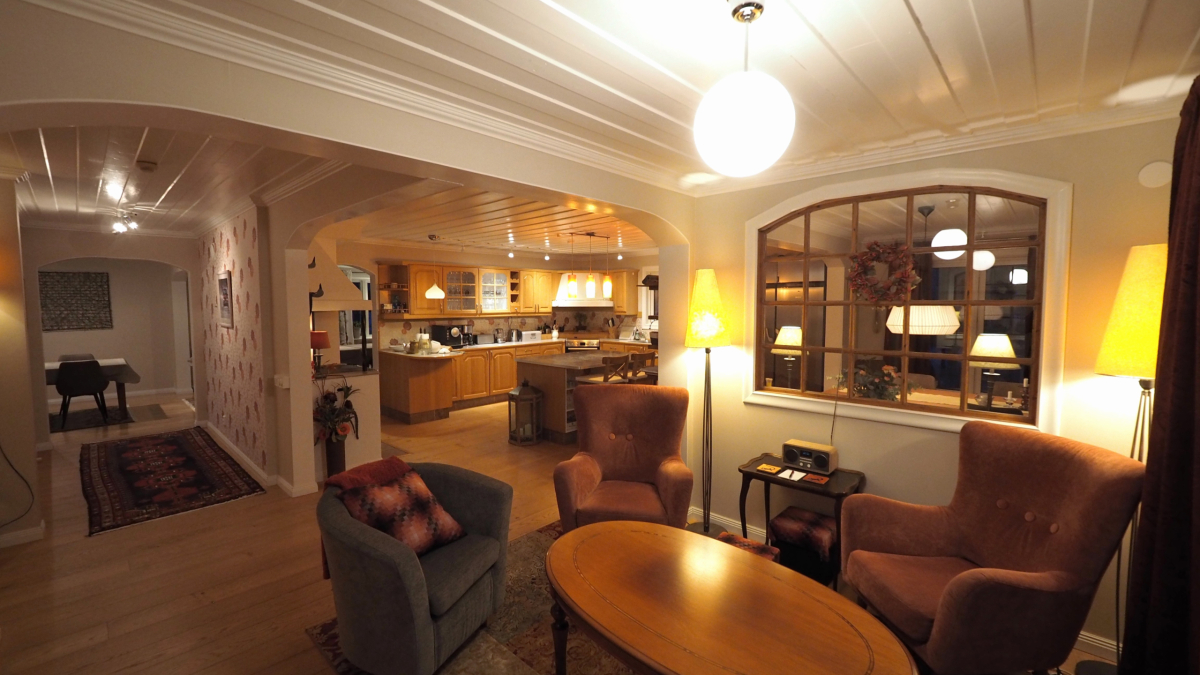
This large villa features four bedrooms, a large kitchen and dining area and generous social spaces making it suitable both for work and pleasure. A separate workshop building is located right next door.
WC
Kitchen
Presentation equipment
 Accommodation
High-speed WiFi
Catering possibilities

With its location at the shoreline of Lake Kakel, with immediate access to the lake ice tracks, this hut is the perfect place to comfortably host a group of 20 – 40 people in combination with work or other activities on the lake track area.
WC
Presentation equipment
High-speed WiFi
Catering possibilities




This course is designed to test vehicle handling with a balanced mix of sharp and smooth curves and fast- and slow speed sections.
The course is about 1.5 kilometers long and 6 meters wide, with a surface of packed snow/scraped ice.
We can also construct custom-made handling courses with a specific layout upon customer request.
 1 500m
 6m
 January - March




The circular track is constructed with an inner lane of polished, low-friction ice. Outside, it has a section of plowed ice with a higher friction, offering a range of different surface characteristics in the same track.
The standard radius of the circle is 120/150 meters (inner/outer) with a track width of 30 meters, but this can be adjusted upon the request. We can also construct custom-made circular tracks with varying size for exclusive use.
The layout of a circular track allows for testing to be conducted continuously at constant speeds
120/150m
30m
January - March
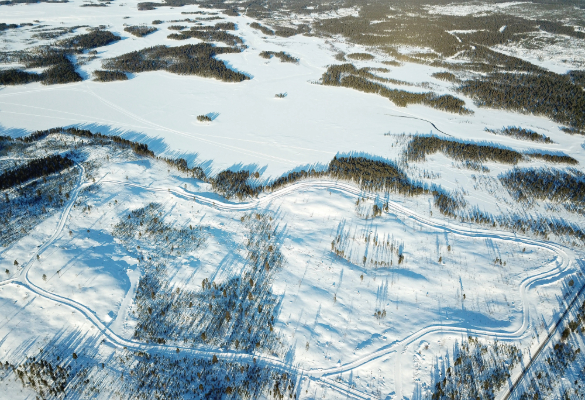

This course is designed to test vehicle dynamics and drivetrain with a balanced mix of fast and smooth curves and fast- and slow speed sections.
The course is about 1.5 kilometers long and emulates the characteristics of a typical small, Scandinavian country road in wintertime in an undulating terrain. The surface is made up of packed snow.
The track is currently rented out exclusively to a customer between January and March.
1 500m
6m
November - March


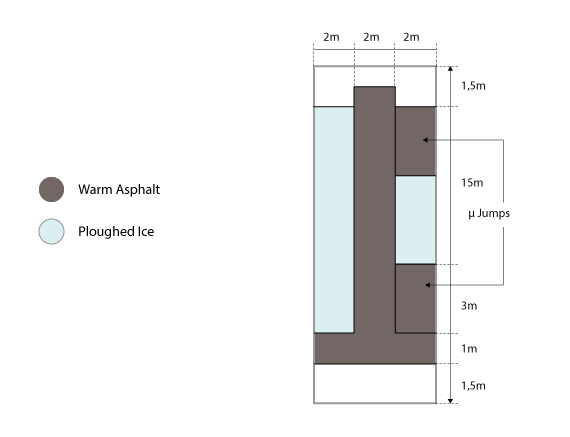
In connection with our main facility at Maskinvägen, Arjeplog we offer two test hills with 15 and 20% incline respectively.
The 15%-hill has a surface of either packed or loose snow, depending on client request.
The 20%-hill has a section of heated asphalt and offers full split-µ conditions with different µ-jump possibilities.
20m
6m
November - March


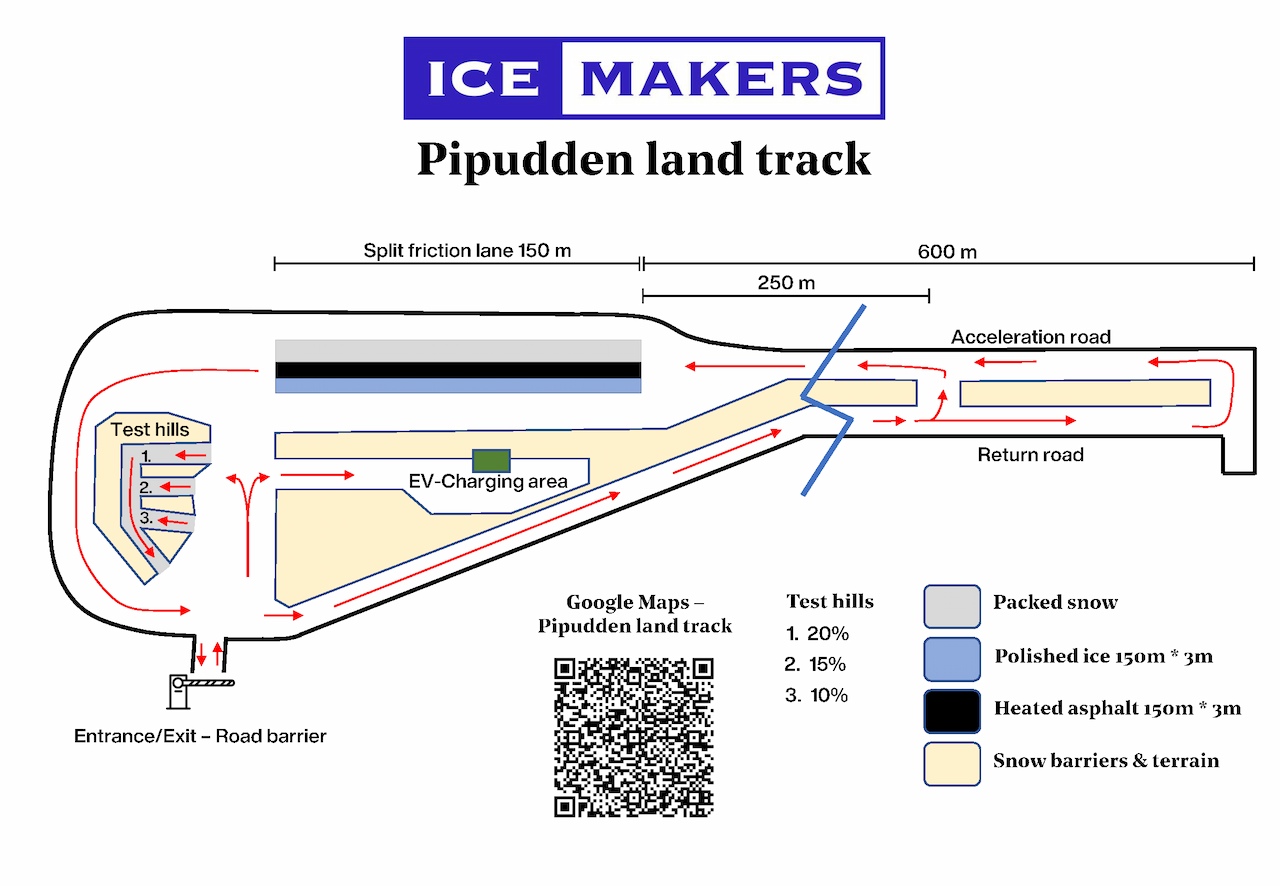
Close to our lake tracks at Pipudden, we offer a land based straight track with a split-µ section.
The track has a 600 meter long acceleration road leading up to a 150 meter long split-µ section with heated asphalt, polished ice and packed snow – giving different µ-jump possibilities.
750m long / 150m split-µ
November - March


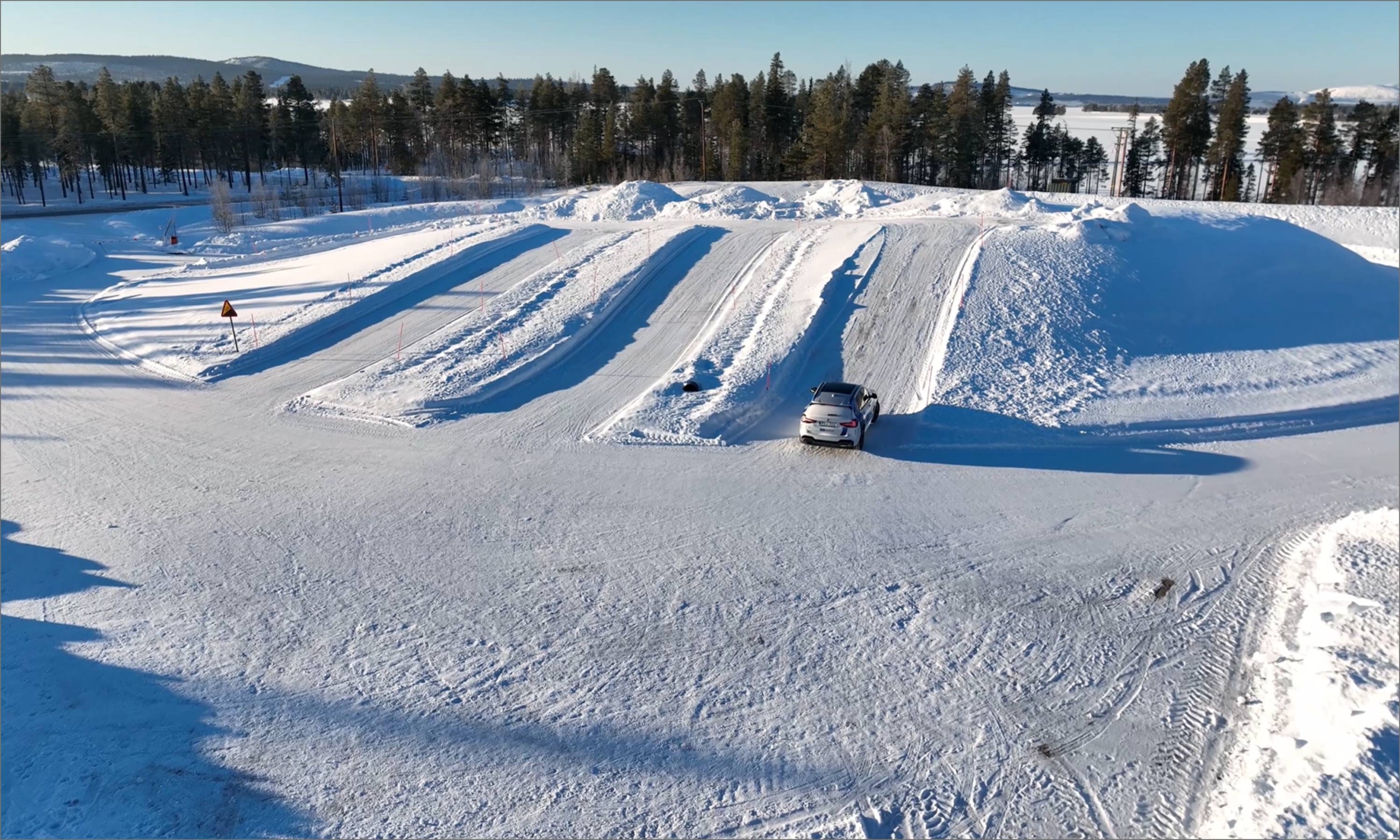

Next to our split-µ land track at Pipudden, we offer three test hills with 10, 15 and 20% incline.
20 m
6 m
November - March


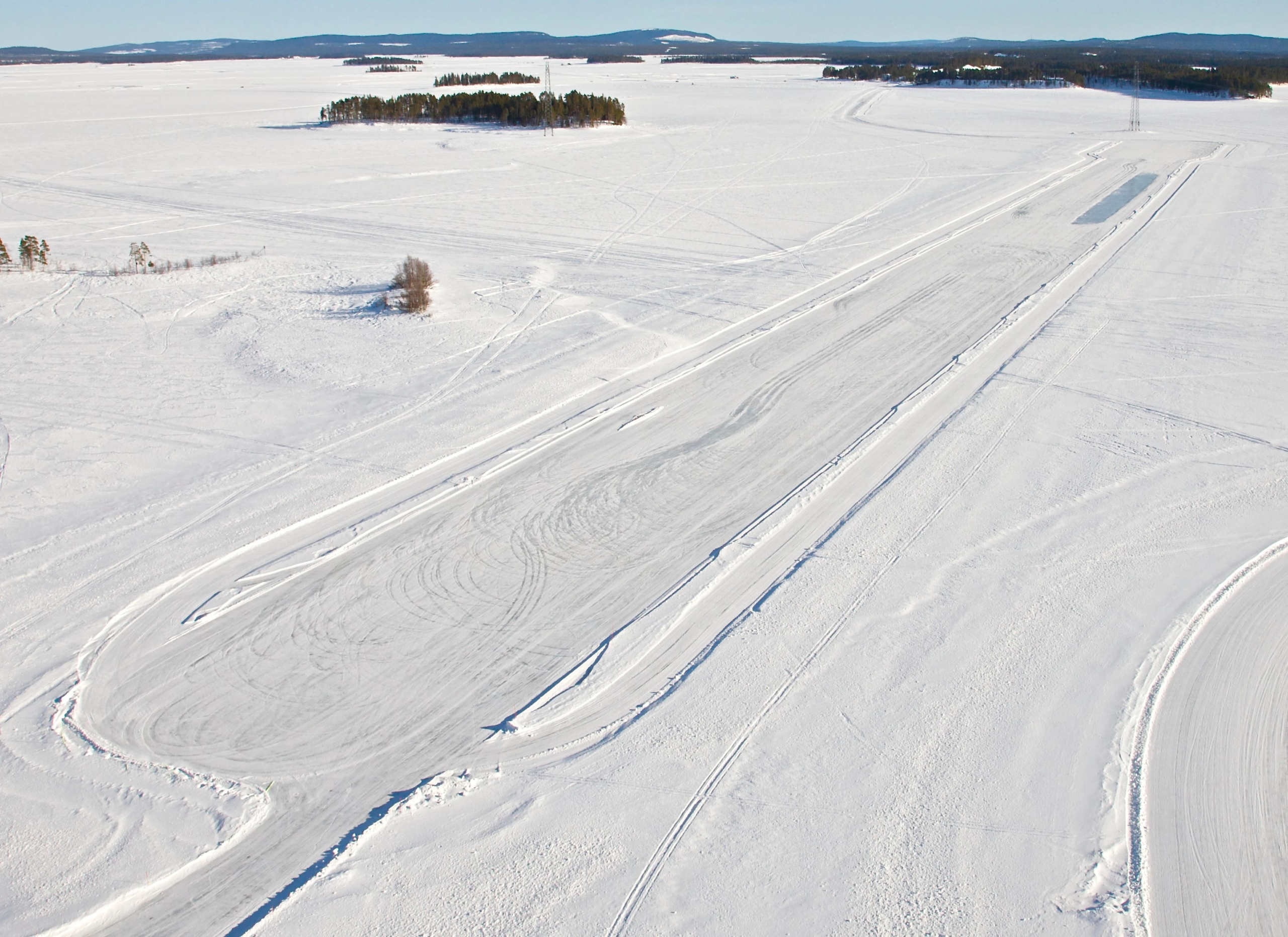
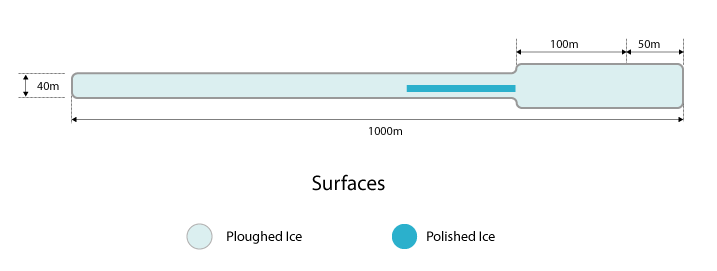
The dynamic straight consists of a lane with a packed snow/graded ice surface as well as a section with polished ice, allowing for split-µ conditions.
The track is 40 meters wide and 1 000 meters long as standard. The length and/or width may be adjusted upon specific customer requests, and we can also custom-make a track for exclusive use.
The wide, open area makes the track very versatile and it can be used for many different test applications.
1,000m
40m
January - March